

Configure Kimi
Kimi is a large language model service developed by Moonshot AI, renowned for its ultra-long context processing capability (2 million characters). It supports long document reading, file analysis, web search, and is particularly suitable for scenarios involving large amounts of text information.
1. Obtain Kimi API Key
1.1 Access Kimi Open Platform
Visit the Moonshot Open Platform and log in: https://platform.moonshot.cn/
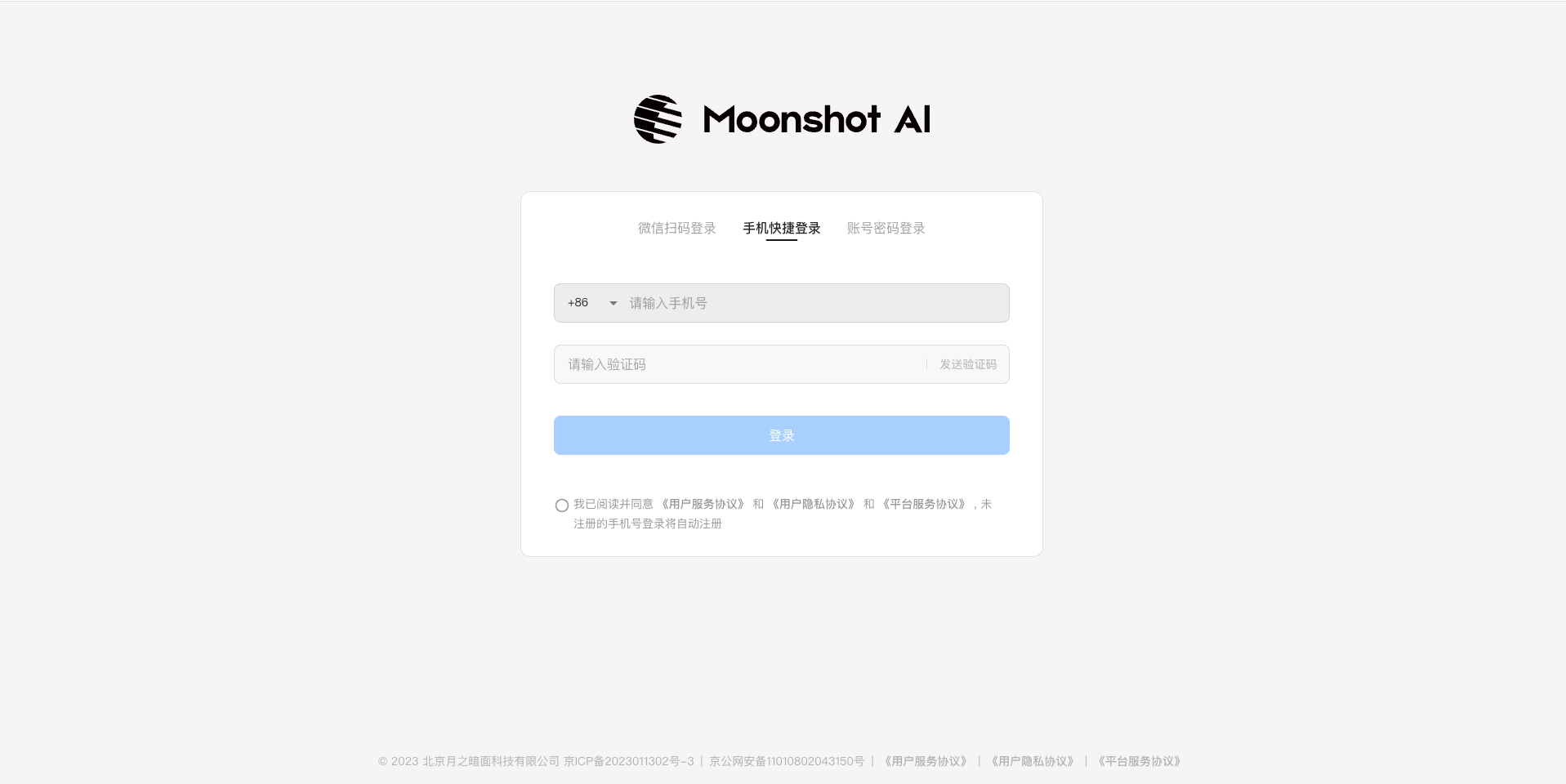
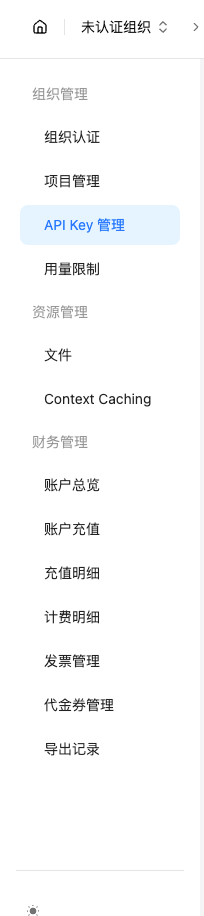
1.2 Navigate to API Key Management
After logging in, click API Key Management in the left sidebar menu.
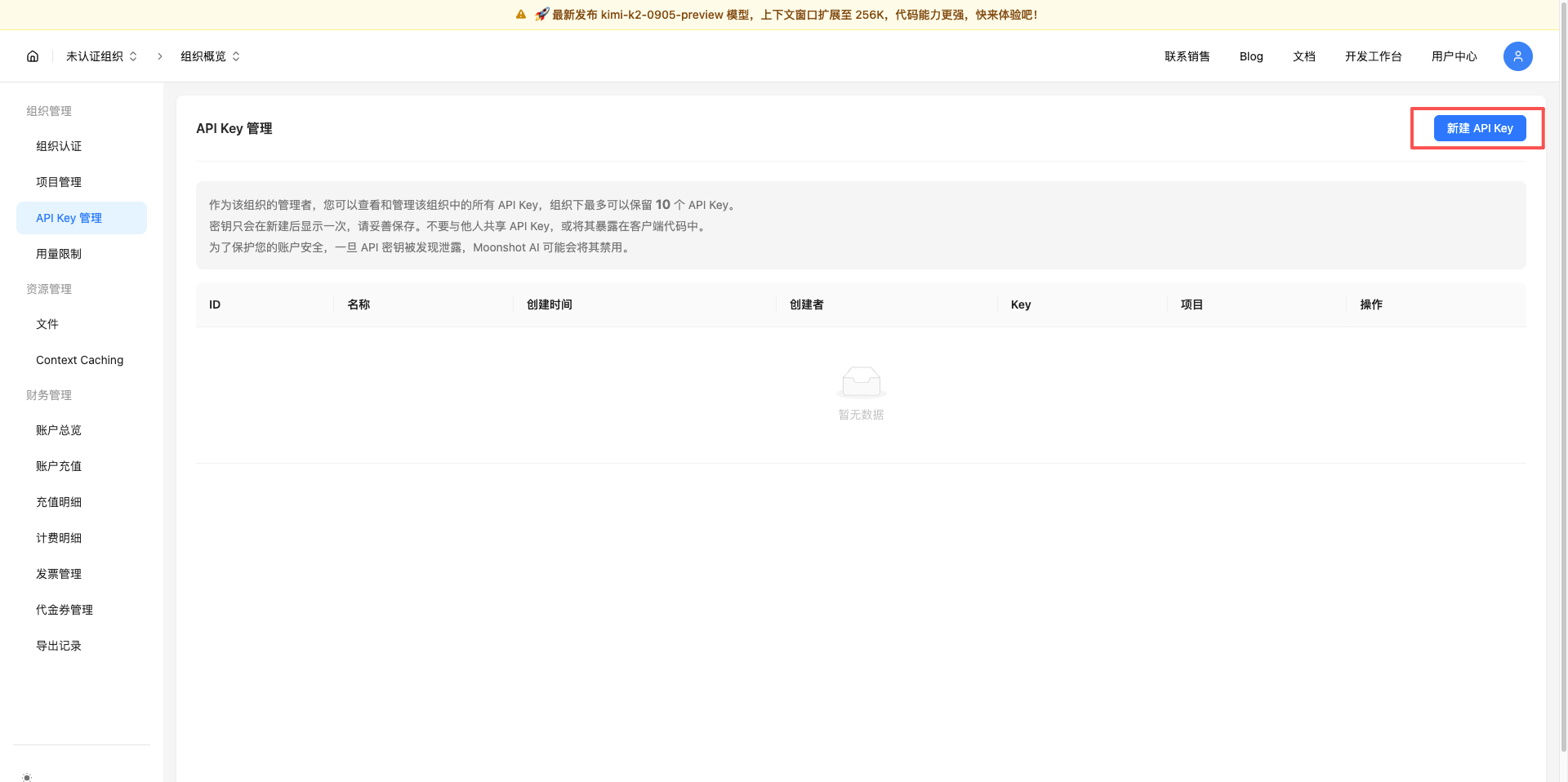
1.3 Create a New API Key
Click the Create New button in the upper right corner.
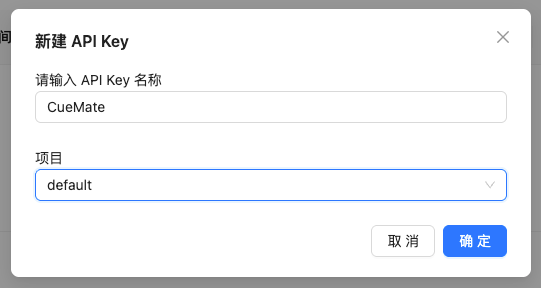
1.4 Set API Key Information
In the dialog that appears:
- Enter the key name (e.g., CueMate)
- Click the Confirm button
1.5 Copy API Key
After successful creation, the system will display the API Key.
Important: Copy and save it immediately. The API Key starts with sk-.
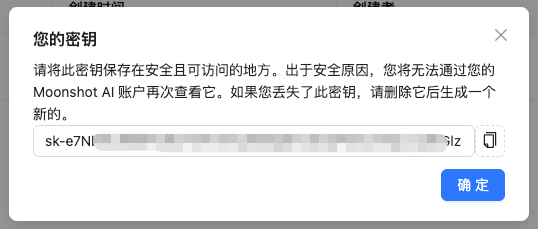
Click the copy button to copy the API Key to your clipboard.
2. Configure Kimi Model in CueMate
2.1 Navigate to Model Settings
After logging into CueMate, click Model Settings in the dropdown menu at the top right corner.
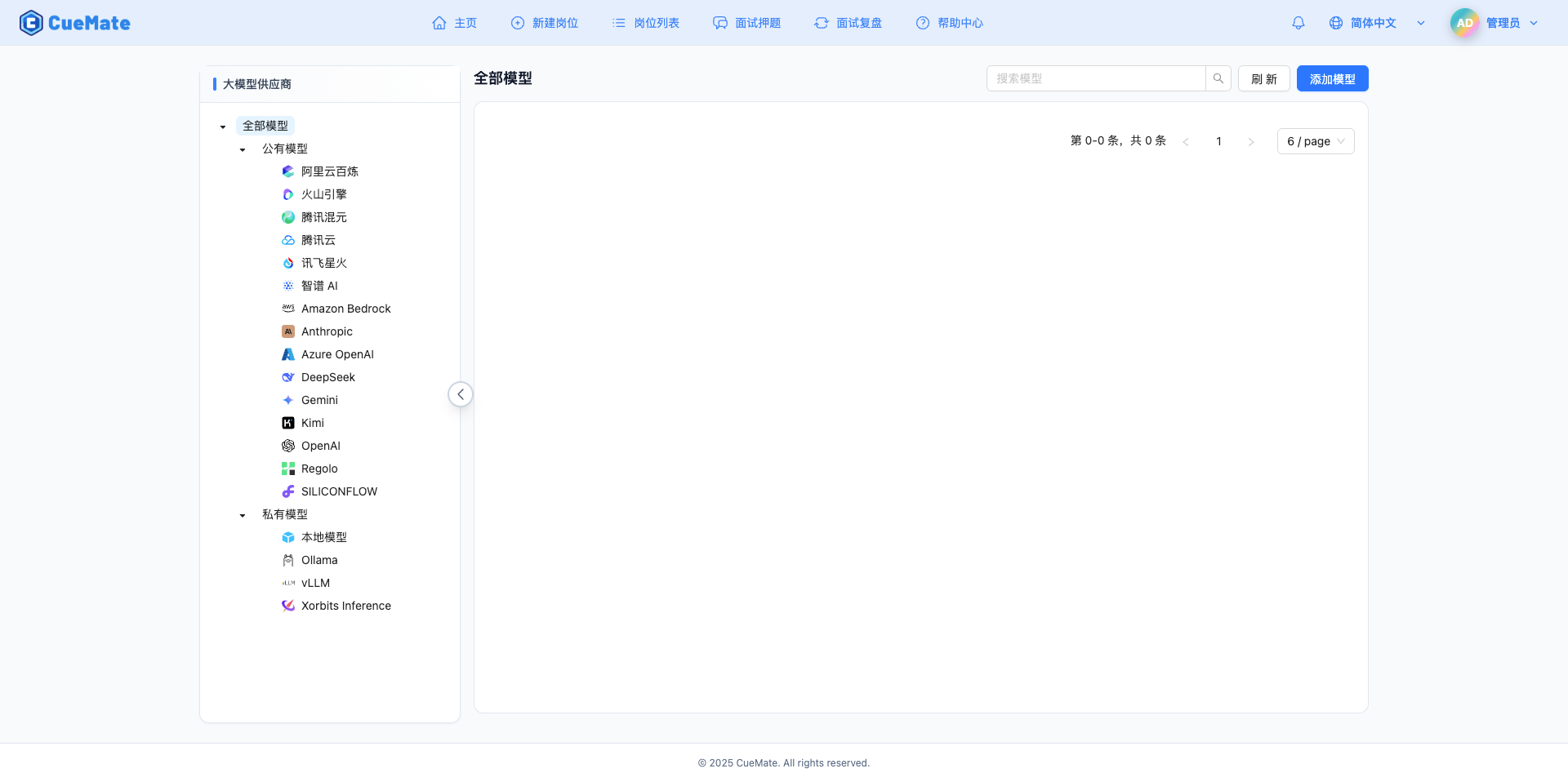
2.2 Add New Model
Click the Add Model button in the upper right corner.

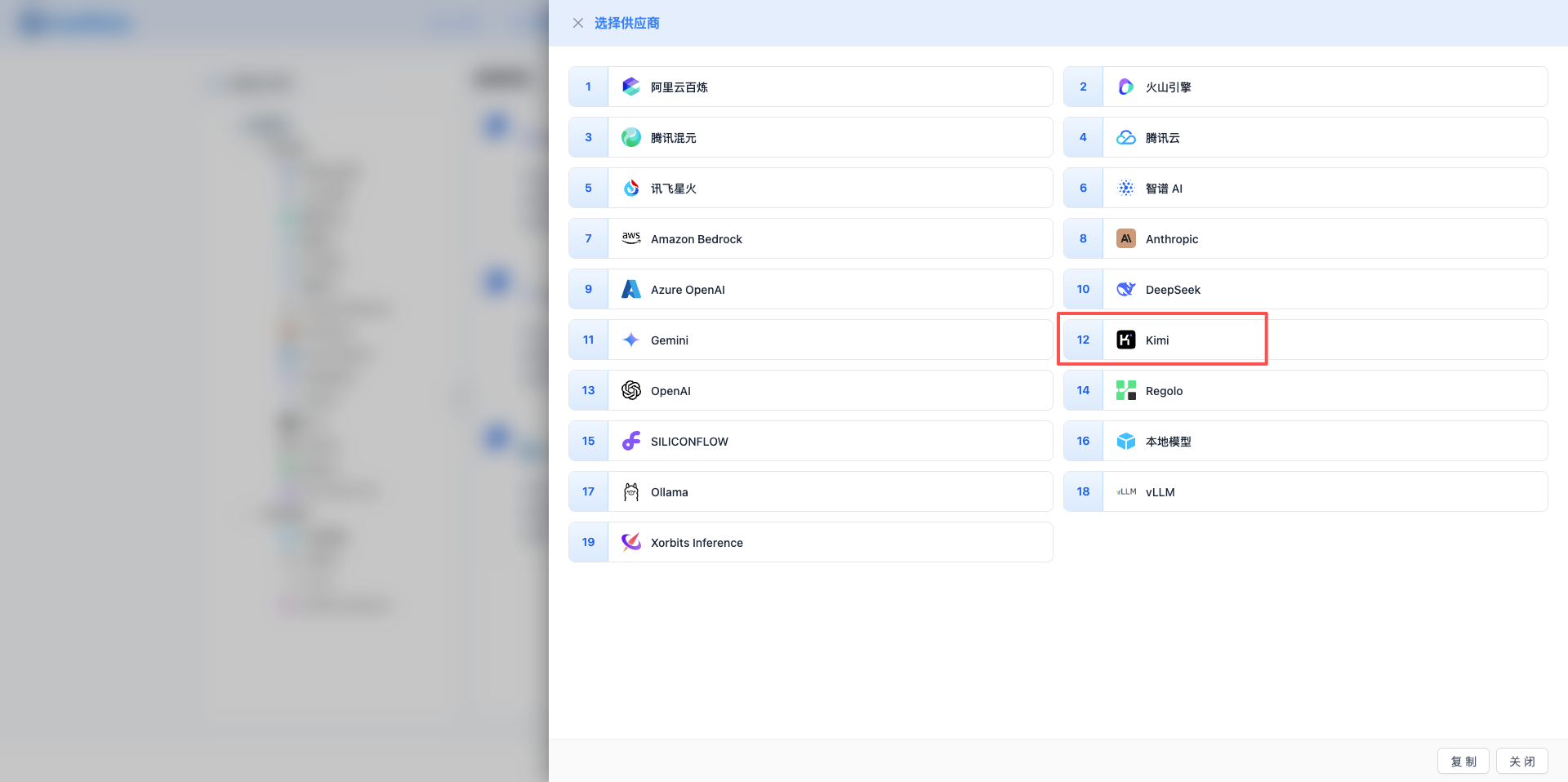
2.3 Select Kimi Provider
In the dialog that appears:
- Provider Type: Select Kimi
- After clicking, it will automatically proceed to the next step
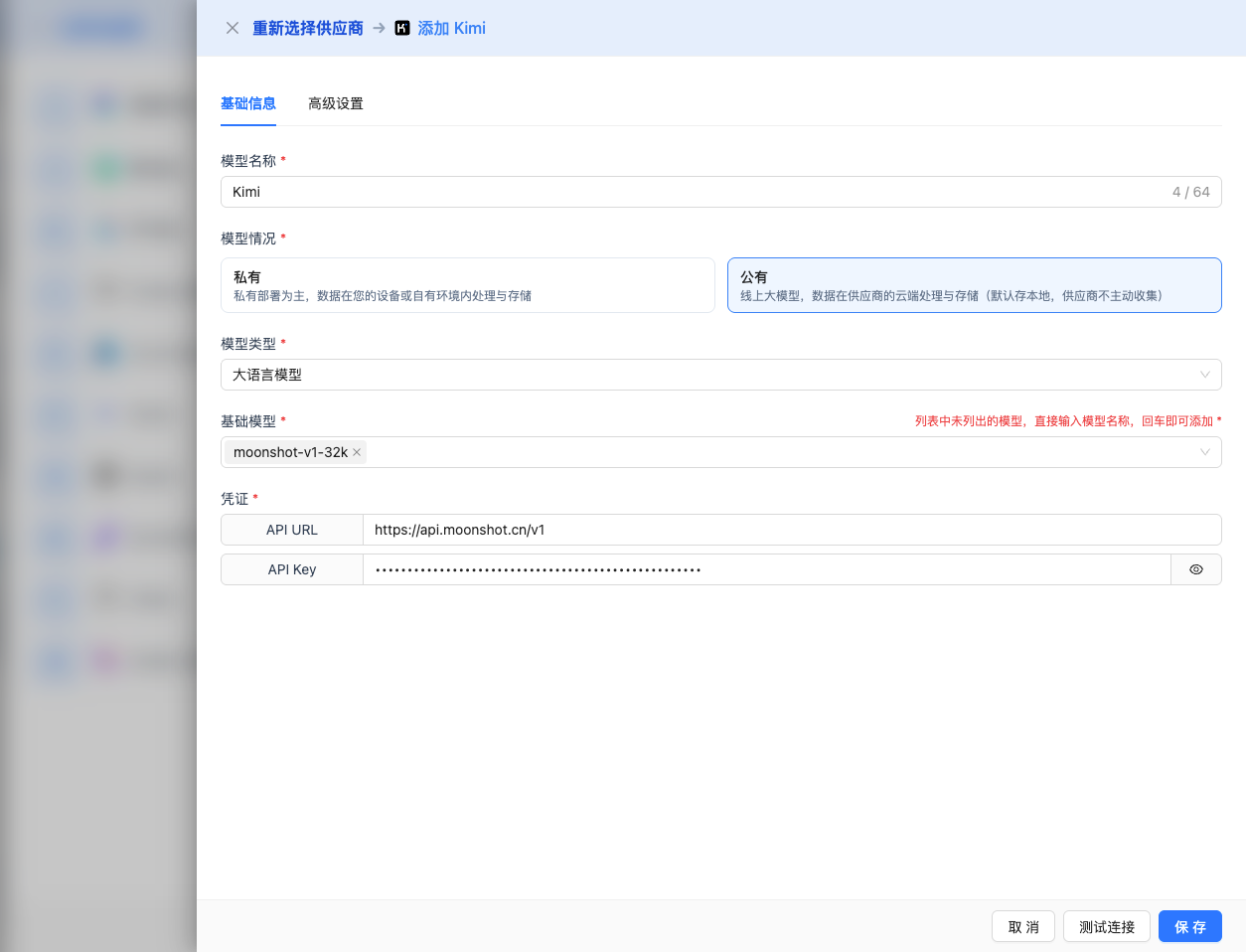
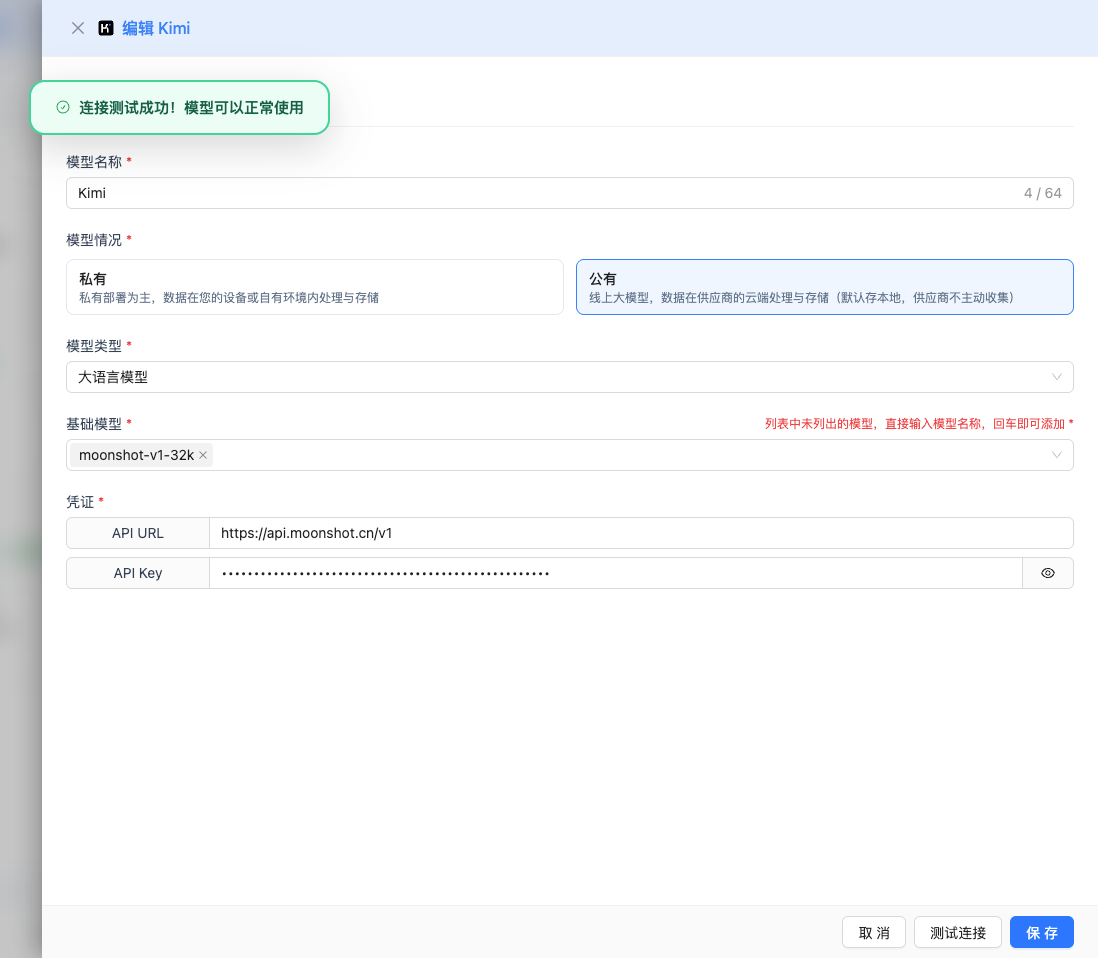
2.4 Fill in Configuration Information
Fill in the following information on the configuration page:
Basic Configuration
- Model Name: Give this model configuration a name (e.g., Kimi-128K)
- API URL: Keep the default
https://api.moonshot.cn/v1(OpenAI-compatible format) - API Key: Paste the Kimi API Key you just copied
- Model Version: Select the model ID you want to use. Common models include:
moonshot-v1-128k: 128K ultra-long context, max output 65K, suitable for ultra-long document understanding and multi-turn conversationsmoonshot-v1-32k: 32K long context, max output 16K, suitable for long document processing and complex reasoningmoonshot-v1-8k: 8K standard context, max output 4K, suitable for regular conversations and quick responses
Advanced Configuration (Optional)
Expand the Advanced Configuration panel to adjust the following parameters:
Parameters Adjustable in CueMate Interface:
Temperature: Controls output randomness
- Range: 0-1 (Note: Kimi's temperature limit is 1, unlike OpenAI's 2)
- Recommended Value: 0.3
- Effect: Higher values produce more random and creative outputs, lower values produce more stable and conservative outputs
- Usage Recommendations:
- Creative writing/brainstorming: 0.7-0.9
- Regular conversation/Q&A: 0.3-0.5
- Code generation/precise tasks: 0.1-0.3
- Long document analysis: 0.2-0.4
Max Tokens: Limits single output length
- Range: 256 - 65536 (depending on the model)
- Recommended Value: 8192
- Effect: Controls the maximum number of tokens in a single model response
- Model Limits:
- moonshot-v1-128k: Max 65K tokens
- moonshot-v1-32k: Max 16K tokens
- moonshot-v1-8k: Max 4K tokens
- Usage Recommendations:
- Short Q&A: 1024-2048
- Regular conversation: 4096-8192
- Long text generation: 16384-32768
- Ultra-long documents: 65536 (128k model only)
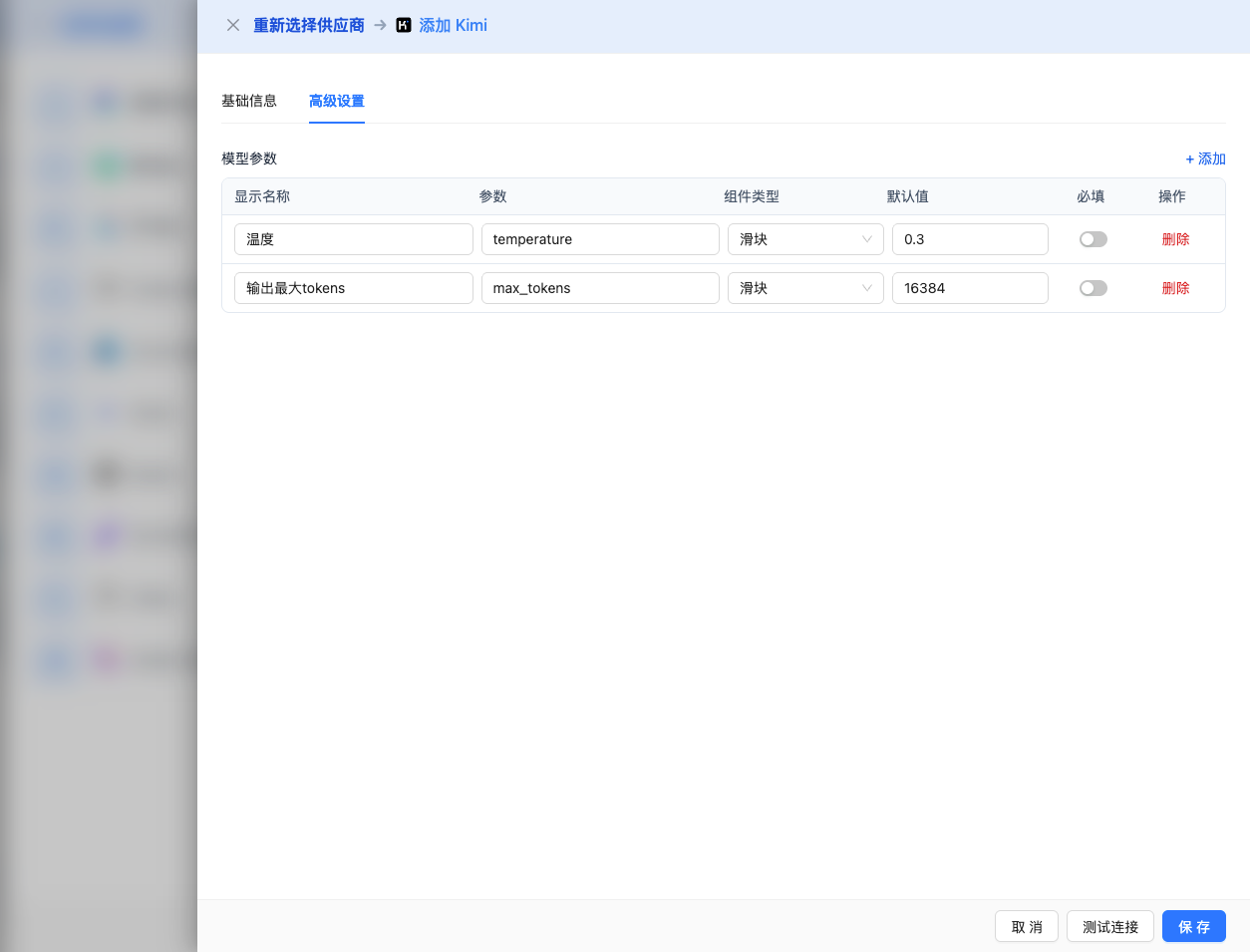
Additional Advanced Parameters Supported by Kimi API:
Although the CueMate interface only provides temperature and max_tokens adjustments, if you call Kimi directly through the API, you can also use the following advanced parameters (Kimi uses an OpenAI-compatible API format):
top_p (nucleus sampling)
- Range: 0-1
- Default Value: 1
- Effect: Samples from the smallest set of candidates whose cumulative probability reaches p
- Relationship with temperature: Usually only adjust one of them
- Usage Recommendations:
- Maintain diversity but avoid extremes: 0.9-0.95
- More conservative output: 0.7-0.8
frequency_penalty
- Range: -2.0 to 2.0
- Default Value: 0
- Effect: Reduces the probability of repeating the same words (based on word frequency)
- Usage Recommendations:
- Reduce repetition: 0.3-0.8
- Allow repetition: 0 (default)
presence_penalty
- Range: -2.0 to 2.0
- Default Value: 0
- Effect: Reduces the probability of words that have already appeared appearing again (based on presence)
- Usage Recommendations:
- Encourage new topics: 0.3-0.8
- Allow repeated topics: 0 (default)
stop (stop sequences)
- Type: String or array
- Default Value: null
- Effect: Stops generation when the specified string is included in the generated content
- Example:
["###", "User:", "\n\n"]
stream
- Type: Boolean
- Default Value: false
- Effect: Enables SSE streaming return
- In CueMate: Handled automatically, no manual setting required
| No. | Scenario | temperature | max_tokens | top_p | frequency_penalty | presence_penalty |
|---|---|---|---|---|---|---|
| 1 | Creative Writing | 0.7-0.9 | 8192-16384 | 0.95 | 0.5 | 0.5 |
| 2 | Code Generation | 0.1-0.3 | 2048-4096 | 0.9 | 0.0 | 0.0 |
| 3 | Q&A System | 0.3-0.5 | 1024-2048 | 0.9 | 0.0 | 0.0 |
| 4 | Document Analysis | 0.2-0.4 | 8192-32768 | 0.9 | 0.0 | 0.0 |
| 5 | Ultra-long Documents | 0.3 | 32768-65536 | 0.9 | 0.0 | 0.0 |
2.5 Test Connection
After filling in the configuration, click the Test Connection button to verify the configuration is correct.
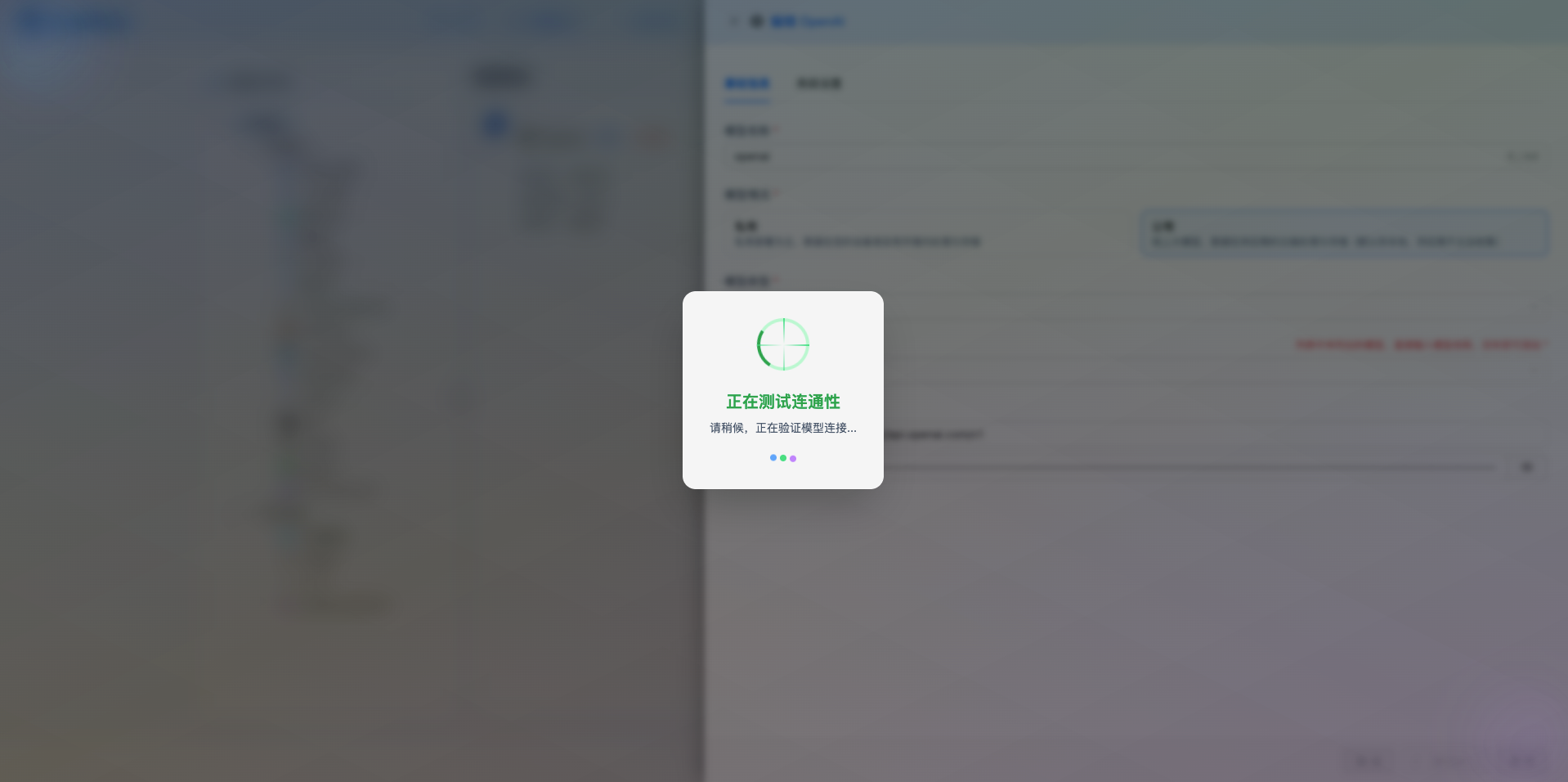
If the configuration is correct, a test success prompt will be displayed, along with a sample response from the model.
If the configuration is incorrect, a test error log will be displayed, and you can view specific error information through log management.
2.6 Save Configuration
After successful testing, click the Save button to complete the model configuration.
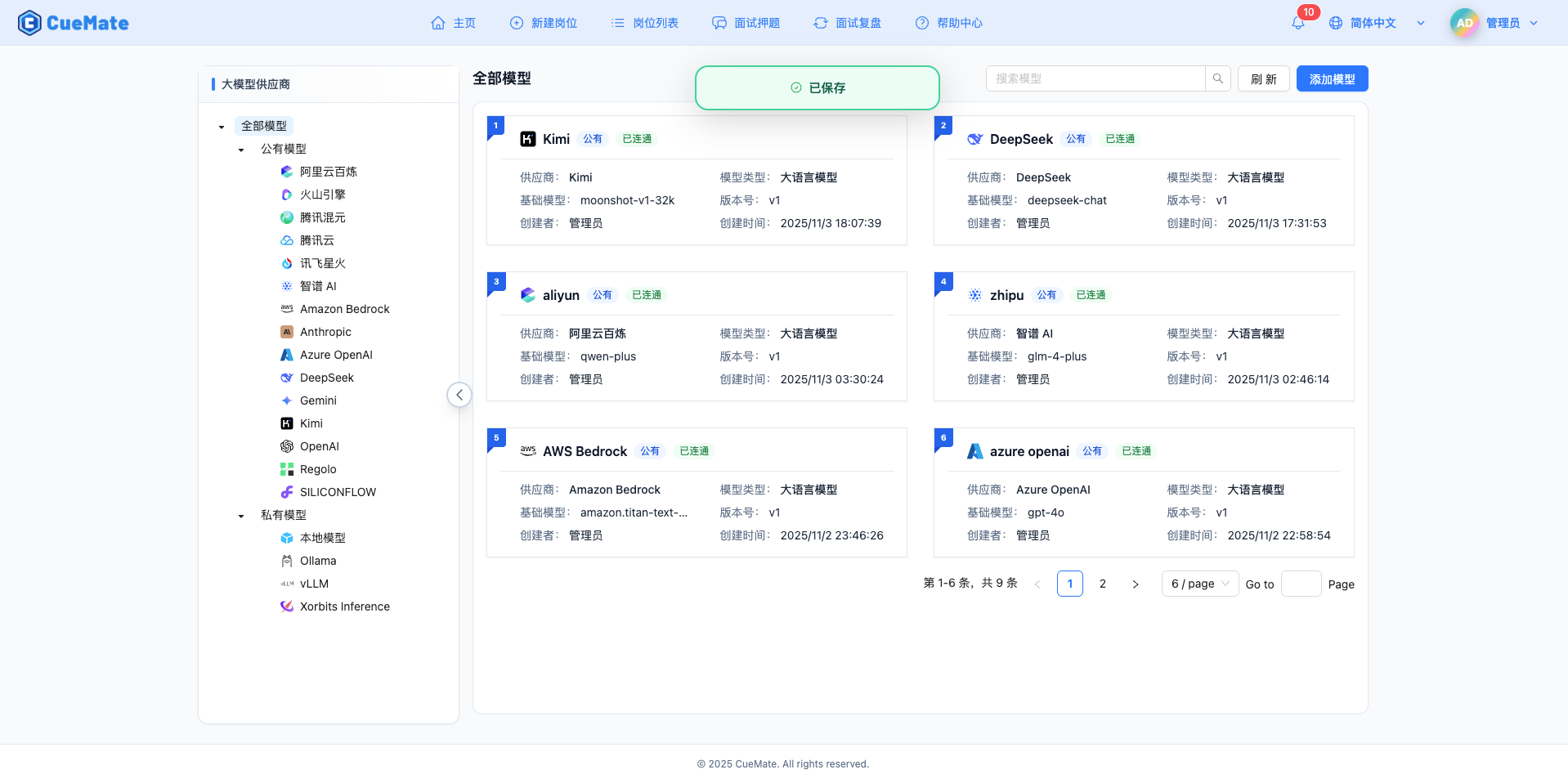
3. Use the Model
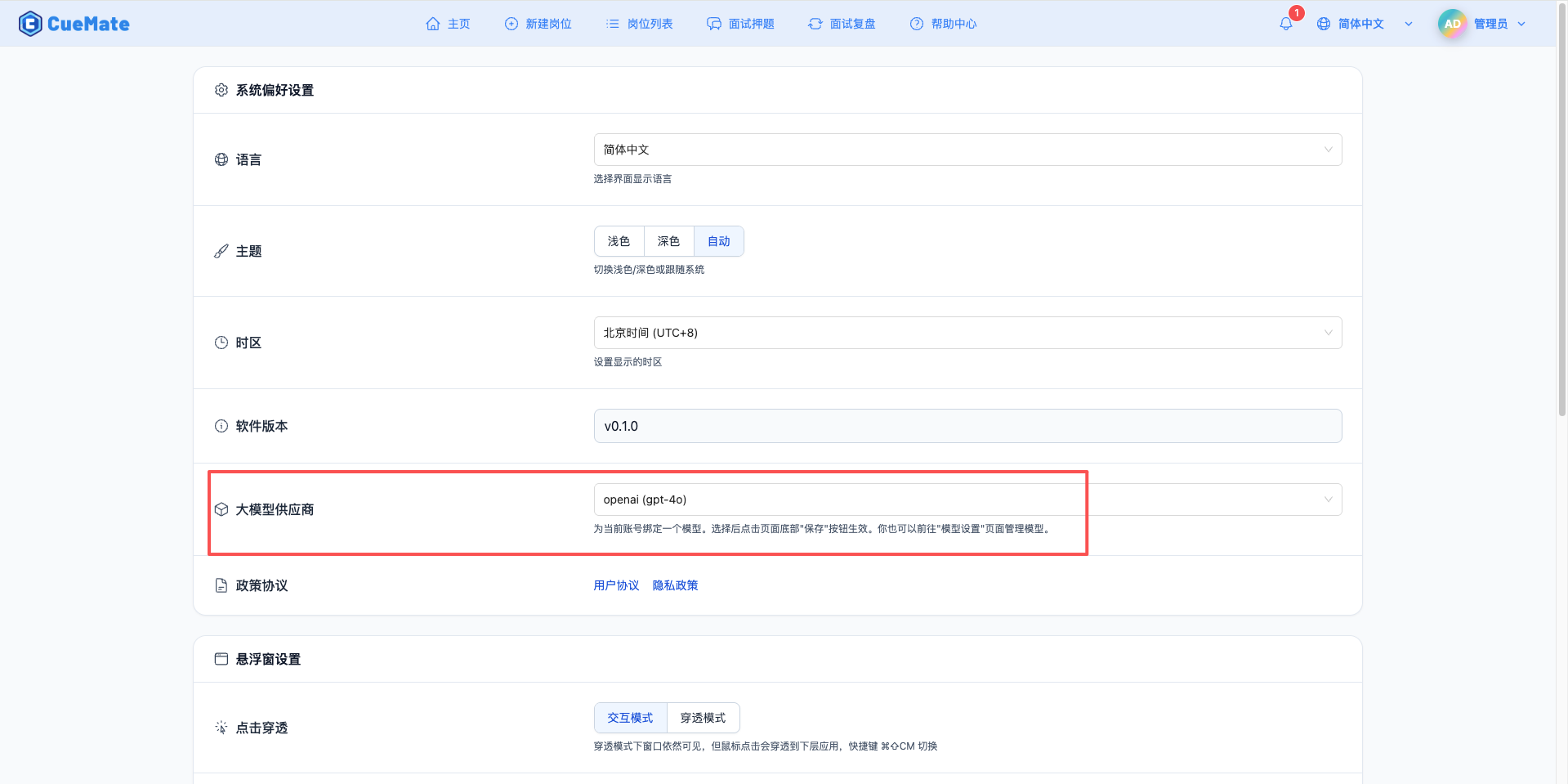
Through the dropdown menu in the top right corner, navigate to the system settings interface and select the model configuration you want to use in the large model provider section.
After configuration, you can select to use this model in interview training, question generation, and other features. You can also individually select the model configuration for a specific interview in the interview options.
4. Supported Model List
4.1 Moonshot v1 Series
| No. | Model Name | Model ID | Context Length | Max Output | Use Cases |
|---|---|---|---|---|---|
| 1 | Moonshot v1 128K | moonshot-v1-128k | 128K tokens | 65K tokens | Ultra-long document understanding, multi-turn conversations |
| 2 | Moonshot v1 32K | moonshot-v1-32k | 32K tokens | 16K tokens | Long document processing, complex reasoning |
| 3 | Moonshot v1 8K | moonshot-v1-8k | 8K tokens | 4K tokens | Regular conversations, quick responses |
5. Common Issues
5.1 Invalid API Key
Symptom: API Key error prompt during connection test
Solution:
- Check if the API Key starts with
sk- - Confirm the API Key is completely copied
- Check if the account has available quota
5.2 Request Timeout
Symptom: No response for a long time during connection test or use
Solution:
- Check if the network connection is normal
- Confirm the API URL address is correct
- Check firewall settings
5.3 Insufficient Quota
Symptom: Prompt indicating quota exhausted or insufficient balance
Solution:
- Log in to the Moonshot platform to check account balance
- Recharge or apply for more quota
- Choose an appropriate model version